
How to price a painting job: a step-by-step estimate
How painters work out a price: measuring, estimating labour and paint, adding prep and overhead, and pricing by the hour, by area or by the room.
Published · By the Invoice Mint team
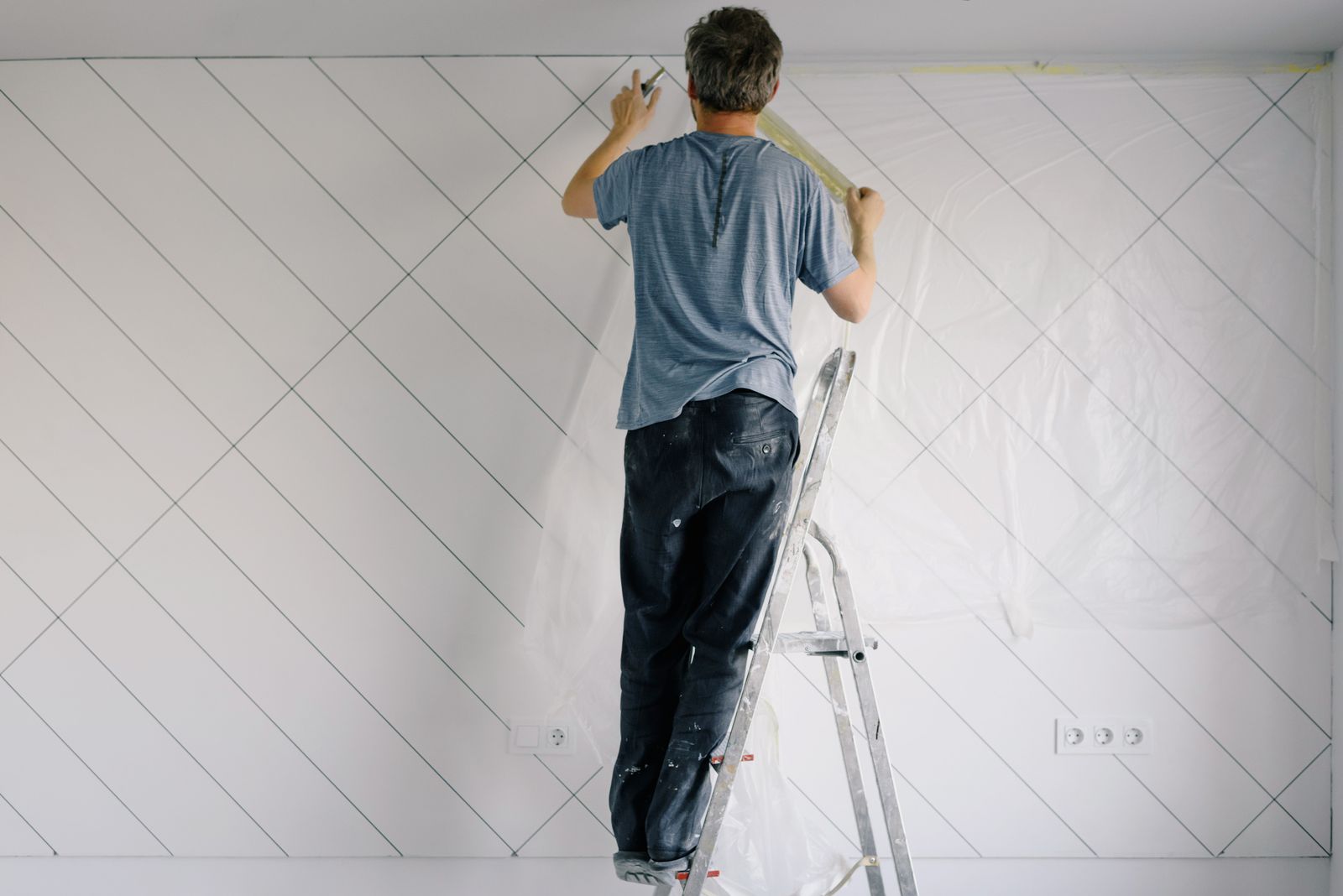
The short answer
To price a painting job, measure the paintable area, estimate how many hours prep, painting and cleanup will take, multiply by your hourly rate, add paint and materials (allowing roughly 350 to 400 square feet per US gallon, or about 10 square metres per litre, per coat), add a markup and contingency, then check the total against local prices per square foot or per room. Prep is where most painting estimates go wrong.
Painting looks simple to price: measure the walls, multiply by a number. Then you start the job and discover the trim needs three coats, the walls are full of nail holes and the client has moved nothing. The painters who price well are the ones who price the prep.
Step 1: How do you walk the job and measure?
Measure every surface you will paint: walls, ceilings, trim, doors and anything else in scope. For walls, multiply the perimeter of the room by the ceiling height, then subtract large openings such as windows and doorways. Note the condition of every surface as you go.
- How much patching, sanding and caulking is needed.
- Whether there is a big colour change or a dark colour that needs extra coats or a tinted primer.
- Ceiling height, stairwells and anything that needs a tall ladder or scaffold.
- How much furniture needs moving and covering.
- Trim, doors and detailed work, which take far longer per square foot than open walls.
Step 2: How many hours will the job take?
Break the job into prep, painting and cleanup, and estimate each from your own experience. If you do not know your production rates yet, time yourself on the next few jobs: how many square feet of wall you roll per hour, how long a door takes, how long it takes to tape and cover a room. Those numbers are the most valuable thing a painting business owns.
Step 3: How much paint and material will you need?
Divide the area by the coverage of the paint, then multiply by the number of coats. Most wall paints cover roughly 350 to 400 square feet per US gallon, or about 10 square metres per litre, per coat on smooth, primed surfaces. Add primer, caulk, filler, tape, plastic, rollers and other consumables.
Step 4: How do you put the price together?
| Item | Amount |
|---|---|
| Walls: 2 coats, about 420 sq ft (39 m²) | |
| Prep: patch, sand, caulk, cover | 4 hours |
| Painting: walls, 2 coats | 6 hours |
| Trim and one door | 3 hours |
| Cleanup | 1 hour |
| Labour: 14 hours at $70 / hour | $980.00 |
| Paint: 3 gallons (about 11 L) at $60 | $180.00 |
| Primer, caulk, tape and consumables | $60.00 |
| Materials marked up 20% | $288.00 |
| Subtotal | $1,268.00 |
| Contingency, 5% | $63.40 |
| Price before tax | $1,331.40 |
The rate and prices here are examples. Use your own hourly rate, worked out from your costs and billable hours, and what you actually pay for paint.
Step 5: How does the price compare with the market?
Divide your price by the area to get a price per square foot or square metre, and compare it with what you know of local prices for similar work. If you are far above, check your hours. If you are far below, you are either much faster than average or you have missed something — usually prep.
Which painting pricing method should you use?
| Method | Pros | Watch out for |
|---|---|---|
| Per job, built from hours | Accurate, fixed price for the client | Takes time to estimate |
| Per square foot or square metre | Fast, easy to compare | Ignores prep and detail work |
| Per room | Simple for clients to understand | Rooms vary hugely in size and condition |
| Hourly | No risk on unknown surfaces | Clients worry about an open-ended bill |
How do you write a painting estimate that wins the job?
- List each room or area, with what is included: walls, ceilings, trim, doors, number of coats.
- Name the paint line and finish, or give a choice of two.
- Say what is excluded, such as moving heavy furniture or major drywall repair.
- Give a start date and how long the job will take.
- State the deposit and payment terms.
Common questions
How do painters calculate how much to charge?
Most work out the labour hours for prep, painting and cleanup, multiply by their hourly rate, and add paint and materials with a markup. Experienced painters then check the result against a price per square foot or square metre, or per room, that they know works in their market.
How much paint do I need per room?
As a rule of thumb, one US gallon covers about 350 to 400 square feet per coat on smooth, primed walls, and one litre covers roughly 10 square metres. Rough, porous or dark surfaces need more. Check the coverage on the product you are using.
Should I charge by the hour or by the room?
Price by the job for most residential work, because clients want a fixed number, but build that number from your hours and materials so you know what you are earning. Charge by the hour for repairs, touch-ups or jobs where the condition of the surfaces is unknown.
Keep reading
How to write an estimate clients say yes to
Most estimates are lost to silence, not to a cheaper competitor. A clear, specific estimate sent quickly gives the client an easy reason to say yes.
Read the guide
Joist alternatives for small contractors: what to use instead, and when to stay
Joist no longer has a free plan, and its cheapest paid plan caps you at five documents a month. Here is what the alternatives cost, where each one fits and when it makes sense to stay.
Read the guide
Estimate vs. invoice: what’s the difference?
They look similar and get confused constantly — usually right up until someone refuses to pay. The difference is simple, and it matters.
Read the guide